Oil and gas
Wellhead and terminal virtualization
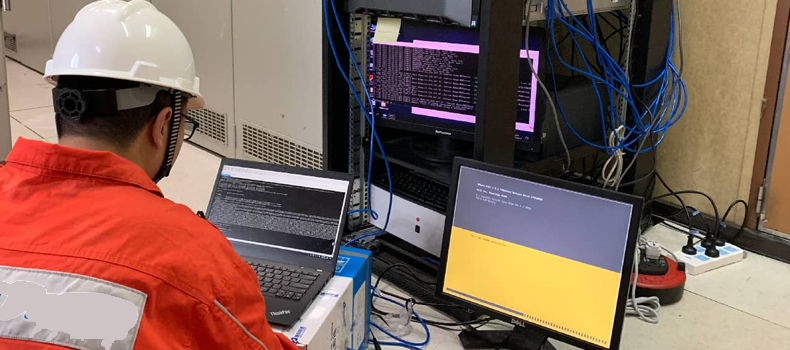
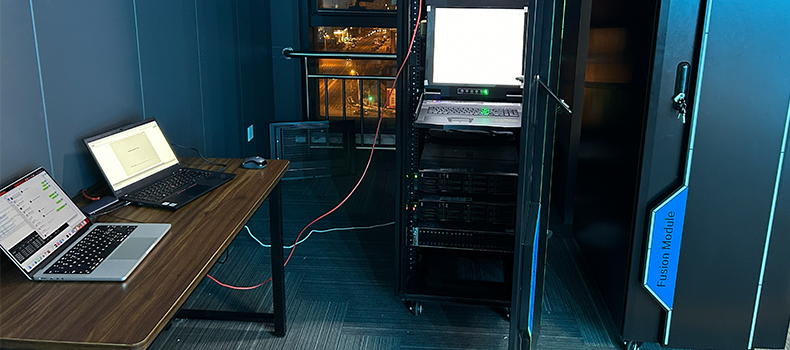
Two Inspur stacks — shore terminal and wellhead — staged, shipped, and brought up offshore.
China · ZhanJiang
How we work / Stage and cutover
Build it on land. Prove it. Pack it. Bring it up on the platform or at the plant with the same names and the same rules.
Some stacks cannot be born on the platform. Power, time, and access are wrong. The useful sequence is: rack on shore, install the hypervisor and the network, accept the cabinet, tear it down, ship, rack again, migrate, open the live rules, and test with the vendors standing there.
A wellhead and a terminal. An offshore cabinet that will not see a full team again for months. A plant that wants the integration done in a hall, not during a shutdown. Two sites, two racks, one pattern — so the second environment is a rebuild, not a folk memory.
Drawings first: cabinet placement, dimensions, base, power, internal wiring, network map. Then the staging install — RAID, virtualization, switching, routing, firewall, backup, audit. Subsystems get a runtime and, if needed, simulated Modbus and TCP. Acceptance, pack, and ship are part of the same job, not a surprise at the dock.
At the far end we rack, dress cables, move to production addresses, set the diode or the live firewall, and run the joint tests. Vulnerability scan, then patch. The handover set is the final PDFs, the cable schedule, the runbook, and the test records.
A stack that left shore working and came up on site. Drawings you can maintain. We stay on if you want a retainer. The hypervisor work underneath is described in Inspur virtualization on site. If your engineers will not be in China for the cutover, read on-site when your team is abroad.
Also read
Work
Get started
Tell us what is in China, what is remote, and what done looks like. We reply by email or WhatsApp.